As governments tighten control over education systems, students from the United States and Nicaragua warn that political interference is undermining academic freedom and the right to a democratic education.
Academic freedom is facing mounting pressure across the Americas, as censorship, political intervention and the targeting of dissenting ideas increasingly shape education systems in the region.
Ahead of the International Day of Education on January 24, and in line with the United Nations’ 2026 theme, “The Power of Youth in Co-Creating Education,” the Coalition for Academic Freedom in the Americas (CAFA) interviewed two young people whose academic trajectories were directly affected by restrictions on academic freedom: Libby Harrity, a student activist in the United States, and Elthon Rivera, a Nicaraguan physician and former student leader now living in exile.
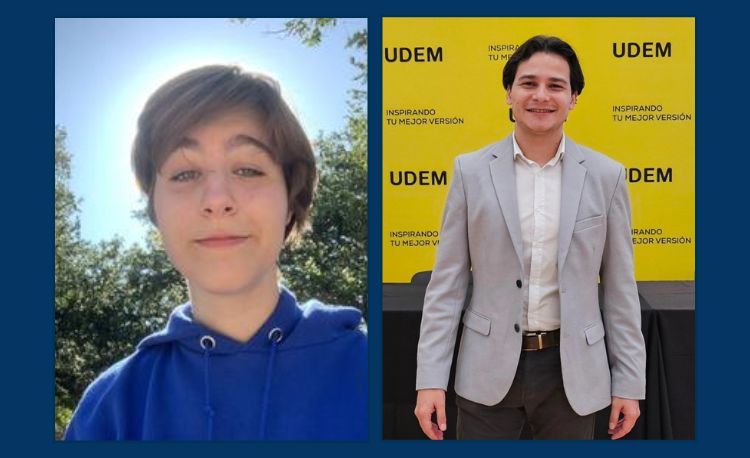
Though shaped by different national contexts, their experiences point to common patterns of censorship, exclusion and political interference in higher education. In this interview, they describe how such pressures disrupt access to quality education, limit critical inquiry and place students at the centre of broader struggles over democratic rights. Both also underline the role of young people in defending academic freedom and preserving educational institutions as spaces for free inquiry and democratic engagement.
Halfway through my college education, I was forced to fight for my right to learn after a political takeover stripped my institution of academic freedom.” Libby Harrity
Could you tell us a bit about your academic journey? What role has education played in your life?
Libby Harrity – Education has shaped my entire being. I would not be who I am today without my experiences in higher education. I began my undergraduate studies at New College of Florida, the honors college of the state. It was a small liberal arts institution with a thriving LGBTQ community and a strong culture of free thought, critical thinking, and independent research.
However, halfway through my education, Florida Governor Ron DeSantis carried out what he openly described as a “hostile takeover” of the institution, with the stated goal of eradicating what he called “wokeness.” In practice, this meant eliminating Black history, gender studies, and attempting to remove queer students from campus—what one of his allies described as an effort to “defeminize academia.”
As a result, midway through my college experience, I was forced to fight for my right to an education. I was met with the power of the state in response and ultimately had to transfer north to Massachusetts, where I continued my studies at Hampshire College.
Hampshire is also a small, nontraditional liberal arts college, very similar to what New College was before DeSantis’s takeover. It became a fantastic academic home for me. As I recovered from what had happened at New College and continued to pursue my education on my own terms, Hampshire was a place where I was encouraged to explore my interests freely. I was not censored in what I was allowed to study, read, or engage with intellectually.
That has been my academic journey, and it has completely shaped the way I see the world.
Elthon Rivera – My academic career has been marked by a very adverse political context in Nicaragua. I began my medical studies in my country, and when I was in my fifth year, the socio-political crisis that has affected Nicaragua since 2018 broke out. In that context, I took on a role as a student activist, especially in the defense of academic freedom, democracy, and human rights.
As a medical student, I also participated in providing care to people injured in the streets, as the government had denied medical care in public hospitals. As a result of this commitment, I was unfairly and arbitrarily expelled from the university, without clear explanations and under false accusations that I never committed. This temporarily interrupted my education.
Subsequently, I made great efforts to continue my studies, seeking opportunities at other universities and participating in various academic initiatives within Nicaragua. However, in 2022, the government arbitrarily closed more than 30 universities in the country, including the institution where I was studying. In addition, I was politically persecuted and sought by the police, which forced me into exile.
In exile, I managed to obtain a scholarship to study in Romania and, fortunately, I was able to graduate as a doctor in July 2025. I am currently a doctor and continue to aspire to pursue postgraduate studies and further my academic training, which is one of my great passions and where I see myself in the near future.
Academic freedom is the starting point of all other freedoms, because critical thinking begins in the human mind”. Elthon Rivera
Based on your experience as a student and student leader, why is academic freedom a central element in ensuring the right to education in a full and democratic way?
Libby Harrity – Based on my experience as a student and the honor of serving as a student leader, I believe academic freedom is the only way to ensure the right to education in a full and democratic sense. If people do not have the freedom to teach and the freedom to learn without interference, education becomes subject to the whims of those in power rather than to truth, inquiry, and open academic discourse.
Free, uncensored thinking and teaching are essential. A comprehensive and honest education produces informed citizens. Informed citizens become thoughtful leaders, and thoughtful leaders create good public policy. That is why academic freedom is so critical to democracy itself.
Elthon Rivera – Academic freedom is a fundamental pillar of democracy, education, and social development in every sense. It consists of a series of essential rights: freedom of expression, freedom to teach, freedom to learn, freedom of peaceful assembly, and freedom to produce, disseminate, and receive knowledge.
It is from academic freedom that critical thinking develops, and from my point of view, all freedom begins in the minds of human beings. When this right is affected, authoritarian governments often use education as a mechanism of political domination, because they know that limiting academic freedom allows them to control societies.
Restricting this right can create a submissive, fearful, and confused society, exposed to scientific denialism, manipulation of information, and the dissemination of false content that serves specific power interests. That is why academic freedom is fundamental: it is the starting point for all other freedoms.
Political intervention led to a mass departure of faculty and direct discrimination against students, severely undermining access to quality education”. Libby Harrity
How do processes of political interference in universities affect, in practice, students’ access to a critical, diverse, and high-quality education?
Libby Harrity – I have seen firsthand how political interference in universities damages students’ access to high-quality education. At New College of Florida, the quality of education declined drastically after the hostile takeover by Ron DeSantis. Nearly all faculty members left the institution following the political intervention, depriving students of access to experienced and knowledgeable educators.
This also contributed to a broader “brain drain,” as educated professionals increasingly leave the southern United States for the North in order to escape these draconian education policies.
Additionally, political interference has led to direct discrimination against students. I witnessed queer students being forced off campus and relocated to hotels so that their assigned housing could be given to students who fit a cisgender, heterosexual, white, Christian, athlete-centered framework. Being pushed off campus severely lowered their quality of life, made attending classes more difficult, and isolated them socially.
These students were ostracized by peers who were implicitly told they were more entitled to the university. All of this made it harder for queer students to benefit from their education. This is a clear example of how political interference actively prevents students from accessing and enjoying a critical, inclusive, and high-quality education.
Elthon Rivera – When universities are affected by political interference or other powers that manipulate academic freedom, and when classrooms become spaces for indoctrination, manipulation, or domination, it negatively impacts society as a whole.
Universities train future professionals, academics, scientists, and educators, who in turn will educate the next generations from early childhood education to higher education.
For this reason, universities are one of the main institutions responsible for producing knowledge and strengthening critical thinking in people.
When authoritarian governments attempt to dominate these spaces, the social effects are almost immediate and, in addition, serious consequences are generated in the medium and long term, affecting the scientific, educational, and democratic development of a country.
Attacking the right to education means denying societies the ability to reach their full intellectual and democratic potential”.Elthon Rivera
The International Day of Education invites us to reflect on education as a human right. In your view, what happens when this right is undermined by censorship, fear, or the persecution of ideas?
Libby Harrity –This question is especially important because education has never been formally recognized as a human right in the United States. That is why it is so crucial to introduce a human rights framework when discussing education and academic freedom.
When education is undermined by censorship, fear, or the persecution of ideas, students are no longer allowed to simply be students. Instead, they are forced into conflict with political actors who want them to learn only what the regime deems acceptable.
In the United States today, students are increasingly denied access to Black history and are instead taught a sanitized version of the country’s past—one that presents the nation as inherently virtuous while ignoring the harm it has inflicted, both domestically and internationally.
As someone who has watched access to quality education deteriorate, I can say with certainty that when education is weakened, social turmoil follows. When people are denied truth and critical thinking, very bad things happen.
Elthon Rivera – When the human right to education is attacked or restricted, what is denied to society is the opportunity to learn, teach, and develop its full intellectual, social, scientific, and academic potential.
Attacking or manipulating the right to education immediately translates into the manipulation of individuals and societies as a whole. Furthermore, these effects do not remain within a country’s borders, but become global phenomena that export mediocrity, authoritarianism, and resignation.
Often, people stop fighting for their rights because they have been deprived of an education that allows them to understand their importance or because they have been instilled with a fear of defending them. In the context of International Education Day, it is essential to remember that education is key to understanding and defending all human rights. If education is affected, human rights cannot be learned or defended either.
It is essential to uplift student voices in debates on academic freedom, because they are the ones experiencing its erosion firsthand”. Libby Harrity
Considering the theme of the International Day of Education — “The power of youth in co-creating education – how do you see the role of young people as protagonists in defending academic freedom and transforming education systems?
Libby Harrity – I think that this year’s theme for the International Day of Education is super beautifully phrased, because that’s what education is. It’s a cocreation between teacher and student coming to a larger grander truth. When we engage in the exchange of ideas, so when it comes to academic freedom and the transformation of educational systems, it’s essential that we highlight the voices of students and young people in those conversations because they are experiencing it directly.
And they have fresh new ideas that have either not been considered, or which have been given up on. There’s a hope that comes with young people’s experience of the world. And there is also so much experience that is forgotten when you’re no longer a student.
It’s essential that we highlight and uplift student voices in conversations about academic freedom because it is about them and their freedom.
Elthon Rivera – Youth is a key element in the development of academic freedom and education. Young people are the ones who, at this stage of their lives, have the most energy to contribute to societies and are the ones who build the societies of the future.
It is essential that young people play an active role in the right to learn, teach, and distribute information, and that they participate in defining the learning and knowledge that will serve them in their lives, in accordance with their context and generational worldview.
Young people defend academic freedom not only when they protest in the streets, but also when, from the classroom, they exercise critical thinking, ask positive questions, and promote change from the educational space to society.
When students are forced to receive political content unrelated to their academic training, or doctrines imposed as a condition for access to education, this constitutes a flagrant violation of the human right to education. This generates pressure, frustration, and demotivation among young people. For this reason, young people transform and defend academic freedom mainly when they can learn freely in the classroom.
The right to education and academic freedom must be demanded and defended everywhere, because free minds are the foundation of free societies”. Elthon Rivera
What message would you like to share with young students—especially across the Americas, from Canada to Argentina—about the importance of defending public, critical, and free education in building more just societies?
Libby Harrity – The message that I’d like to share with young students across the Americas, about the importance of defending, public critical and free education. And the building of a more just society is that you have the power. Far more than you think you do.
People will listen to you if you use your voice. You just have to use it. And if they don’t listen to you, use it a little bit louder, I think that it’s so important that students recognize their own agency, and that students understand that things can be better remembered that things can be better and that you deserve better.
And that’s what you’re fighting for.
Elthon Rivera – The message I want to share with young people across our continent is that one of the most important rights we must claim is the right to education and academic freedom. This does not mean downplaying other human rights, as they are all equally valuable, but it does mean recognizing that freedom of thought is fundamental.
We must defend at all times the right to have free minds to criticize, learn, and teach. The right to education and academic freedom must be demanded, protected, and promoted in every possible space.
History has shown that when these rights are attacked, societies fall into repressive and authoritarian systems that lead to the exile of young people, social regression, and the collapse of countries.
That is why young people must always be involved in defending and promoting their right to learn, a right that is born in our minds and is strengthened both in the classroom and in our ability to think freely thanks to a free and critical education.